
Beyond Taiwan's new creative endeavors: Why is Portugal a crossroads for entering the international market?
2025.11.25
Article quoted from:台灣新創意外的落腳點:為何「葡萄牙」是走進國際市場的十字路口_
|Global Community Builder Ray Lee
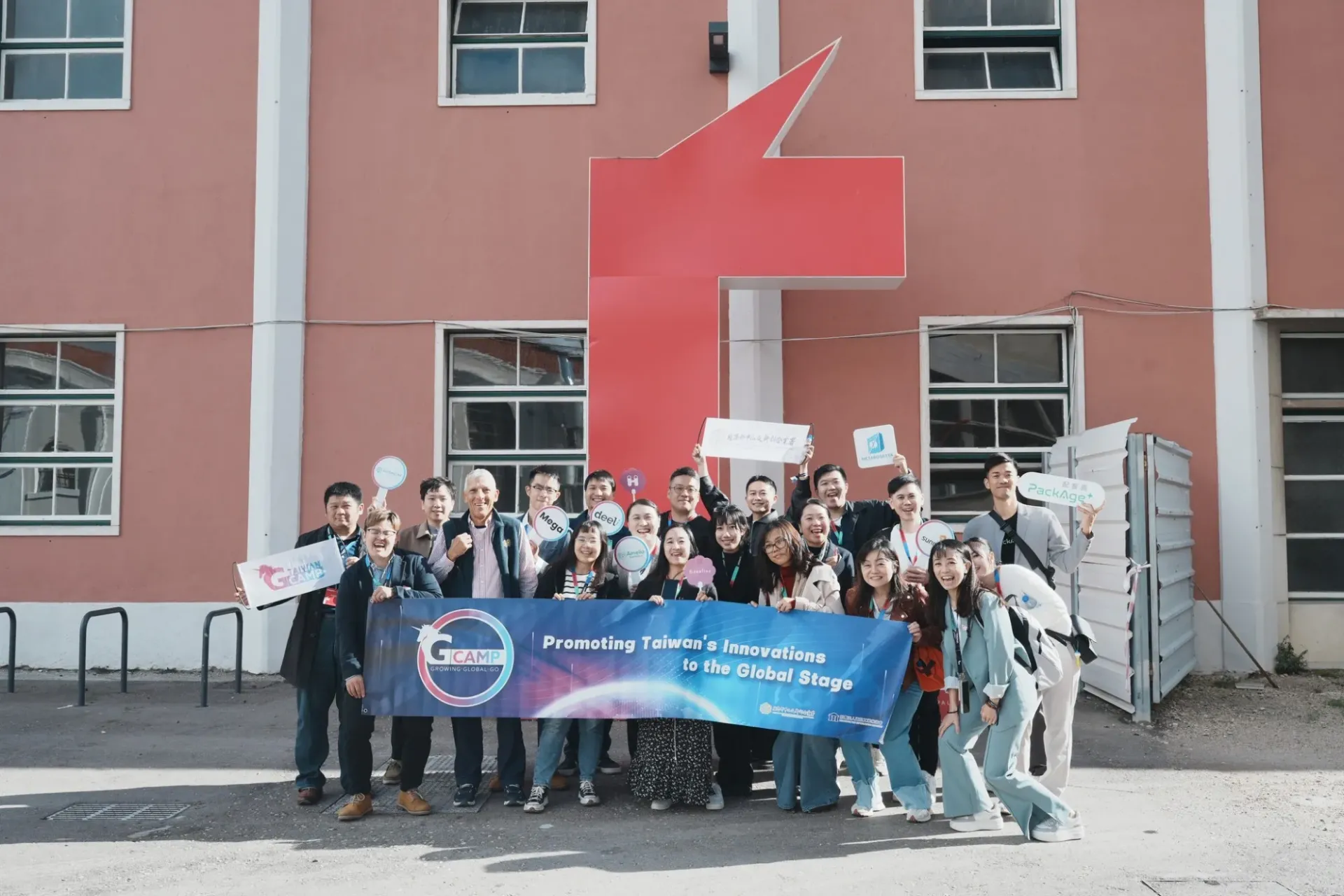
The international startup development program G Camp led more than a dozen Taiwanese teams to participate in the annual technology event Web Summit Lisbon 2025.
In addition to showcasing Taiwan’s hardware and software capabilities to the international audience at the Web Summit exhibition, G Camp also arranged a series of visits, allowing Taiwanese teams to directly engage with local accelerators and investors. While gaining in-depth insights into Portugal’s startup ecosystem, they also identified intersections between Taiwan and the European market, opening up opportunities for future collaboration.
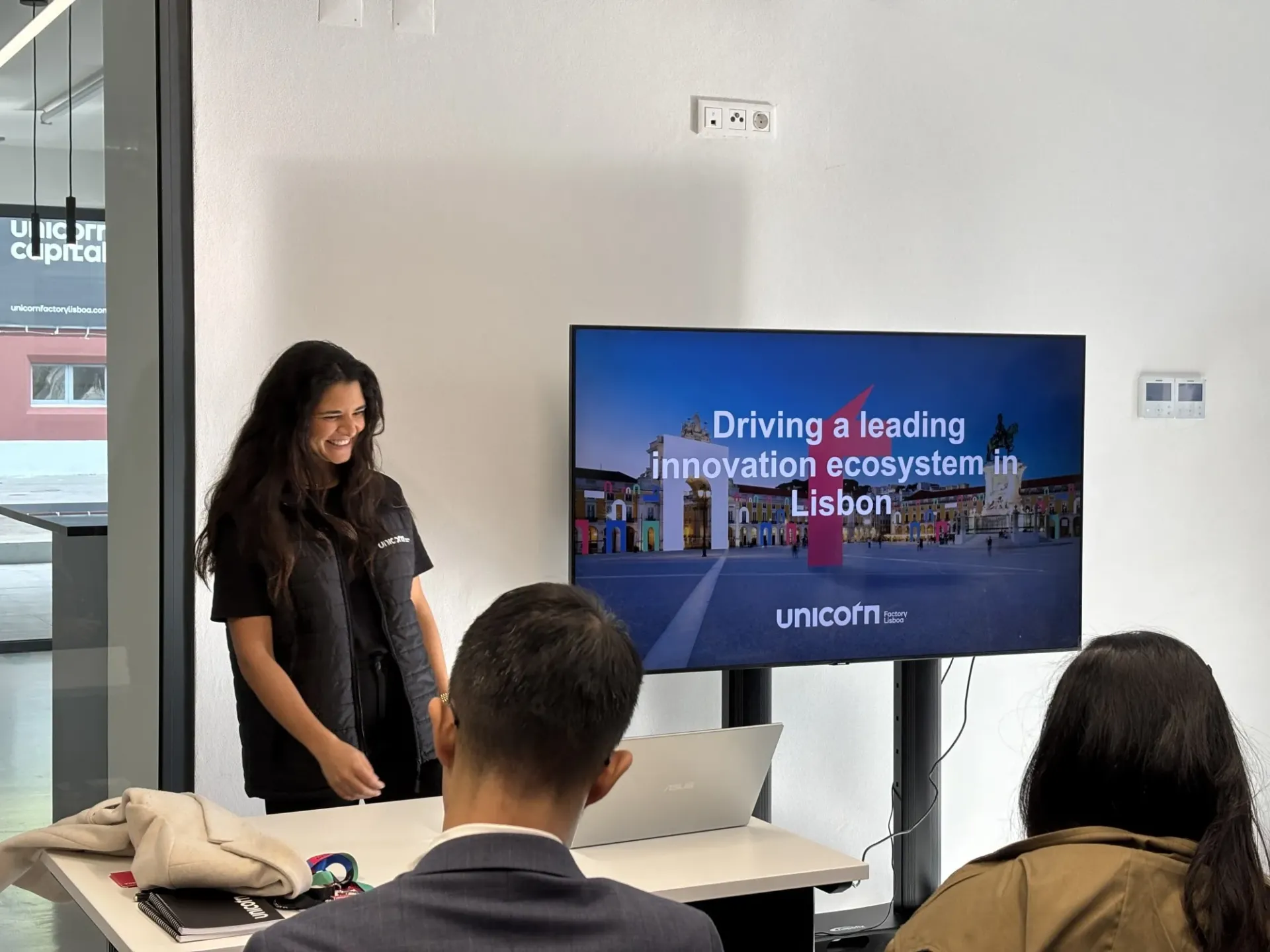
The visiting organizations included key local startup incubation and community partners such as Unicorn Factory, Canopy Community, and AIP (Portuguese Industrial Association).
The next landing spot for international startups?
According to the latest report by Startup Portugal, a nonprofit organization promoting entrepreneurship in Portugal, the number of officially recognized active startups in Portugal has exceeded 5,000, meeting the targets set under the country’s “Recovery and Resilience Plan.”
Currently, startups in Portugal account for approximately 1% of the total number of companies, employment, and GDP. In recent years, the average salary in startups has increased by 10%, now reaching around €2,200 per month—81% higher than the national average.
In recent years, investors, universities, local governments, and public institutions have worked together through incubation support and subsidies to position startups as a key driver of Portugal’s economy.
José Vale, Head of Innovation and Entrepreneurship at IAPMEI (Portugal’s Agency for Competitiveness and Innovation), explained that the key reasons startups and investors are optimistic about Portugal include the widespread use of English and a friendly culture, enabling international teams to integrate quickly.
In addition, Portugal’s technical universities and research institutions have cultivated a large pool of highly skilled engineering and research talent, making it easier for companies to find suitable team members. At the same time, Portugal’s relatively low cost of living and operations makes it attractive to both startups and large enterprises. More importantly, establishing a presence in Portugal not only provides access to the local market, but also serves as a gateway to the entire European Union’s 500 million population, as well as parts of Africa, Brazil, and other Portuguese-speaking countries, forming a unique international market channel.

Stewart Noakes, Chairman of the Board at startup community Canopy Community, also shared: “The growing influence of Web Summit is one of the main reasons behind the vitality of Portugal’s startup scene. The number of international participants continues to increase each year, further driving the overall development of Portugal’s startup ecosystem.” As the scale of the event expands, surrounding activities have also multiplied, creating a highly dynamic and collaborative innovation atmosphere across Lisbon during the exhibition period.
Cleantech and Healthtech as key entry points into the European market
Although Portugal and Taiwan are geographically and culturally distant, what incentives drive Taiwanese startups to establish themselves here? In fact, from the perspective of industrial structure and technological demand, the connection between the two is closer than expected.
Particularly in the fields of Cleantech (net-zero and sustainability technologies) and Healthtech (medical technology), Taiwan possesses corresponding solutions, while Portugal is actively developing sustainable cities, medical innovation, and technology application scenarios within the EU market. This complementarity allows Taiwanese startups not only to find collaboration opportunities in Portugal, but also to use it as a gateway to enter the broader European market.
For example, technologies such as automated mattress dismantling and material upcycling by Yuchen Sustainability Technology, circular packaging by PackAge+, cancer detection technology by Qiji Life Science, and hemostatic products by Amelo Biomed have all attracted significant attention at Web Summit.

Based on the distribution of startup sectors showcased at the event by Startup Portugal, AI, Healthtech, and Cleantech are also the primary industry categories. During the exhibition, Unicorn Factory Lisboa officially announced the launch of a new “Healthhub,” focusing on health and life sciences innovation, bringing together startups, enterprises, researchers, and investors to advance medical technology solutions.
Regarding Cleantech, Narciso Antunes, founder of the sustainability education startup Quizzability, stated that European investors are indeed showing increasing interest in sustainability, including energy transition, climate risk management, and ESG tools, all of which are key focus areas in the European market.
Ricardo Morgado, co-founder of LoopOS, which focuses on building circular economy ERP systems, suggested that Cleantech startups aiming to enter Portugal or the European market should first engage with relevant accelerators and startup support organizations, such as InnoEnergy and Cleantech for Europe. Since Europe’s sustainability ecosystem heavily relies on collaboration among governments, enterprises, and startups, early integration into this network can provide access to funding, technical resources, and rapid customer acquisition through industry-academia-government partnerships.